Swiss art as a mirror of its era
The journey begins with works that portray the spiritual bond between humans and nature—a recurring theme in the works of Ferdinand Hodler, Giovanni Giacometti, and Victor Surbek—responding to the rise of industrial modernity with idealized visions of harmony.
This introspective tone continues in the symbolist rooms, where myth, melancholy and allegory take over. Stylized female figures, dreamlike creatures or dark landscapes by Ernest Biéler and Arnold Böcklin invite us into a realm of hidden realities.
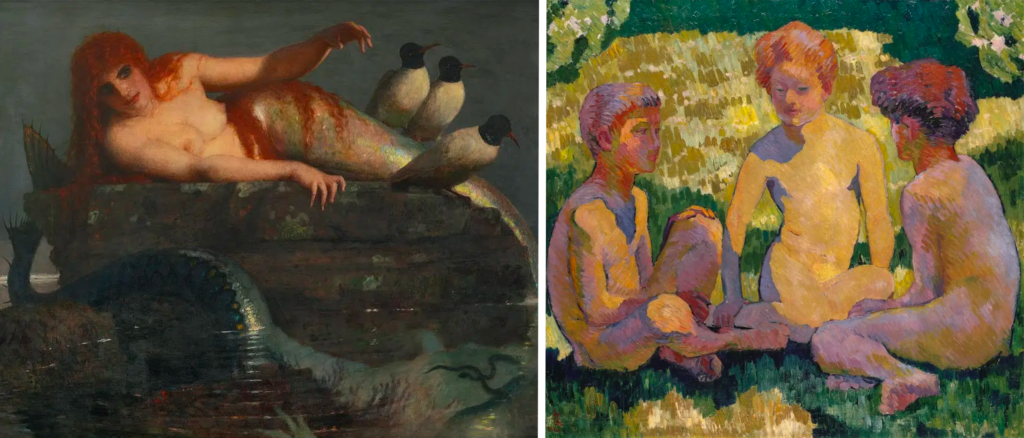
The Alpine world, between myth and memory
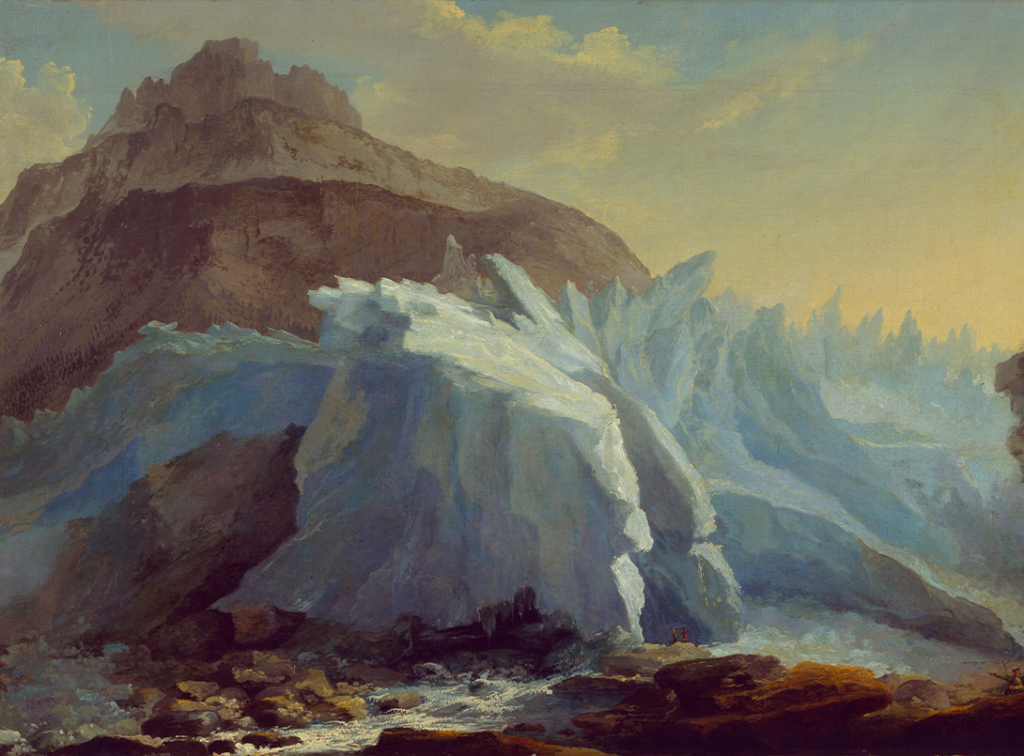
Swiss mountains play a central role. From Caspar Wolf’s Enlightenment-era topographical studies to Hodler and Kirchner’s bold compositions, the Alps become both refuge and spectacle.
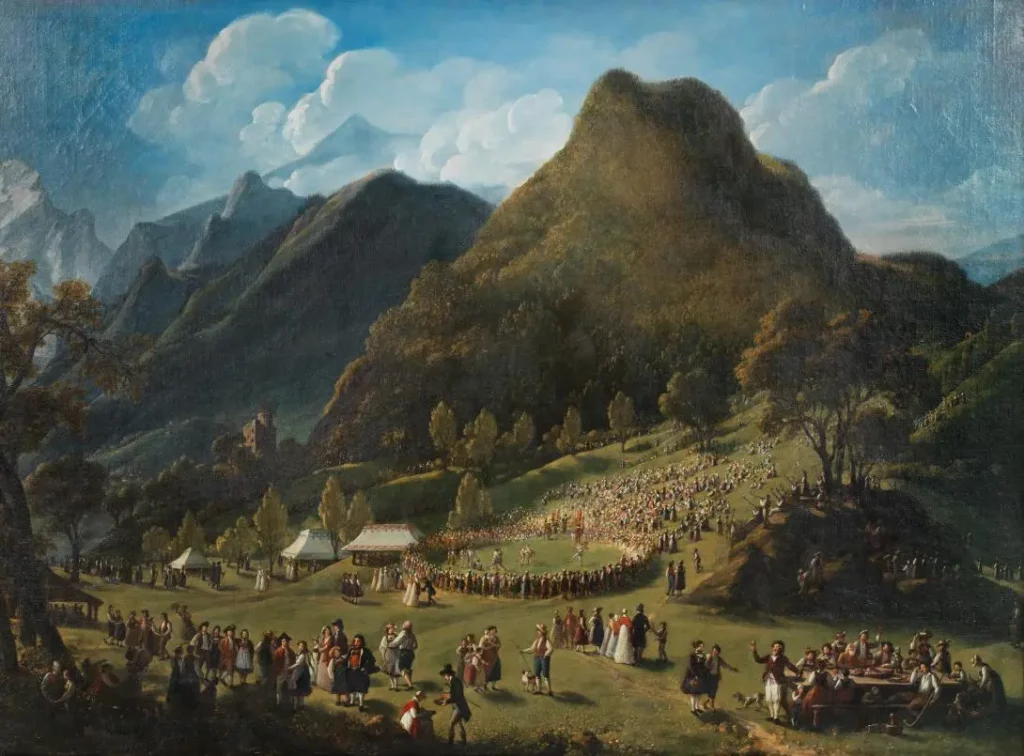
13 – La Fête des bergers suisses à Unspunnen le 17 août 1808, 1808/1809
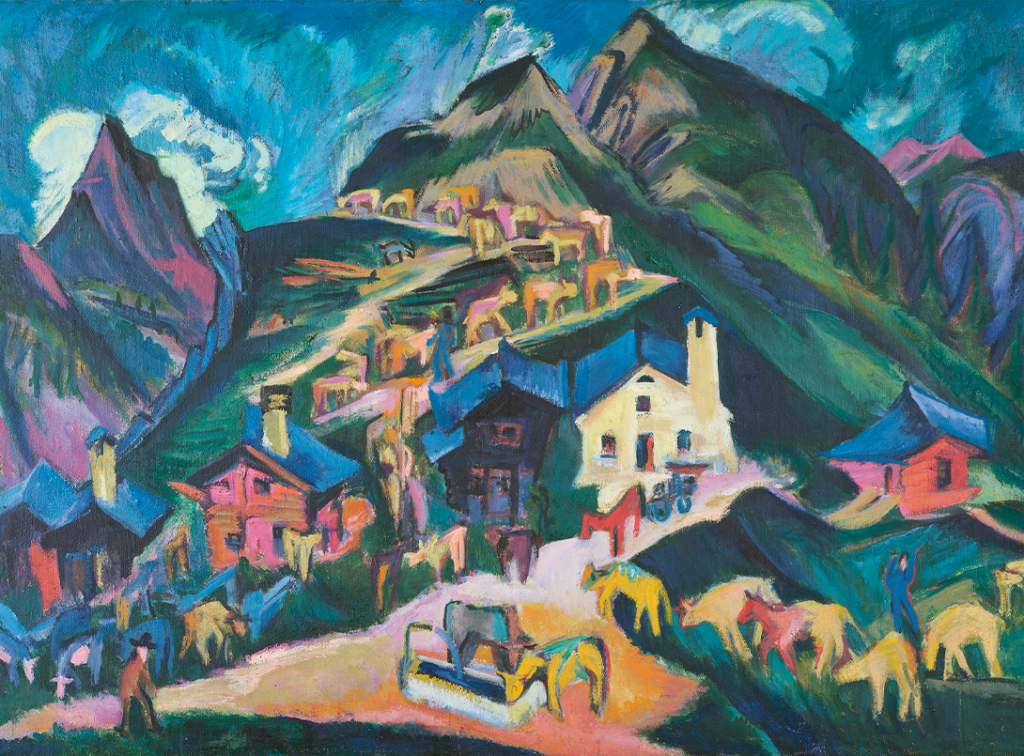
Scenes of rural life and labour reflect a strong national identity—calm, close to nature, and deeply rooted. Hodler’s famous The Woodcutter embodies this poetic strength.
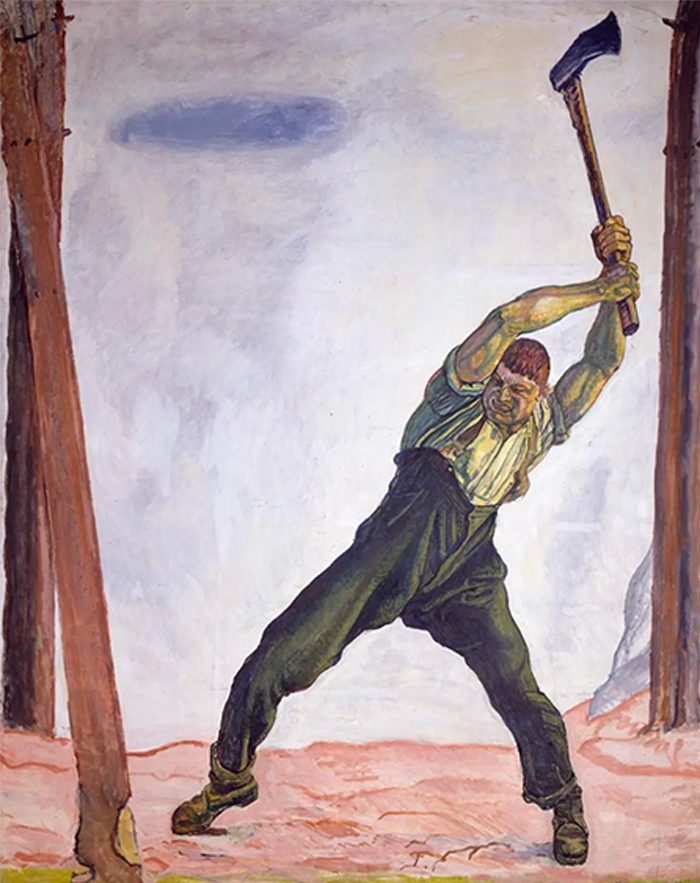
The woodcutter, 1910
Urban leisure and modern expression
With Kirchner and the Rot-Blau group, expressionism takes hold in Switzerland. The exhibition ends on a lighter note with scenes of bourgeois leisure—parks, concerts, dancers, domestic life—captured by Martha Stettler, Louis Moilliet, and Cuno Amiet.